Flooring advice
The best basement flooring for cold Alberta winters
Cold slabs, spring moisture and concrete that's never quite flat. Here's how to pick a basement floor that's warm and lasts.
Finished basements add a lot of living space: a family room, guest room, home gym or suite. But a basement floor has a harder job than any floor upstairs. In central Alberta, that job comes down to three things: cold, moisture and flatness.
Problem 1: the cold slab
Your basement floor is a concrete slab sitting on the ground. Through a Lakeland winter, that slab stays cool. Hard floors laid straight on it feel cold underfoot, and anything that pulls heat from your feet, like tile, feels colder still.
Ways to warm it up:
- Carpet and a dense underlay. The warmest option to walk on.
- Insulated subfloor panels. Raise the floor slightly off the slab with a thermal break. They take up height, so check door and stair clearances.
- In-floor heating. Electric mats under tile or some vinyl products.
- Area rugs on hard floors.
Problem 2: moisture
Concrete is porous. Ground moisture can move up through a slab, especially during spring thaw or after heavy rain. Signs to look for:
- White chalky powder on the concrete (efflorescence)
- Dark damp patches or water staining
- A musty smell
- Past flooding or sump pump problems
Floors that handle moisture well: vinyl plank, vinyl tile, porcelain tile, rubber, and carpet tiles (affected tiles can be lifted). Floors that don’t: solid hardwood, and standard carpet in a basement with a water history.
Fix drainage problems, like eavestroughs, grading and sump pumps, before investing in a new floor.
Problem 3: uneven concrete
Basement slabs often have dips, humps and cracks. Click-together floors like vinyl plank need a flat base, or joints can flex and separate. Proper prep means grinding high spots and filling low ones with levelling compound.
Basement floors ranked
1. Luxury vinyl plank (best all-rounder)
Water-resistant, warm-looking, durable, and a wood look that ties into the rest of the house. Choose a rigid core to bridge small slab imperfections. See vinyl plank.
2. Carpet (warmest)
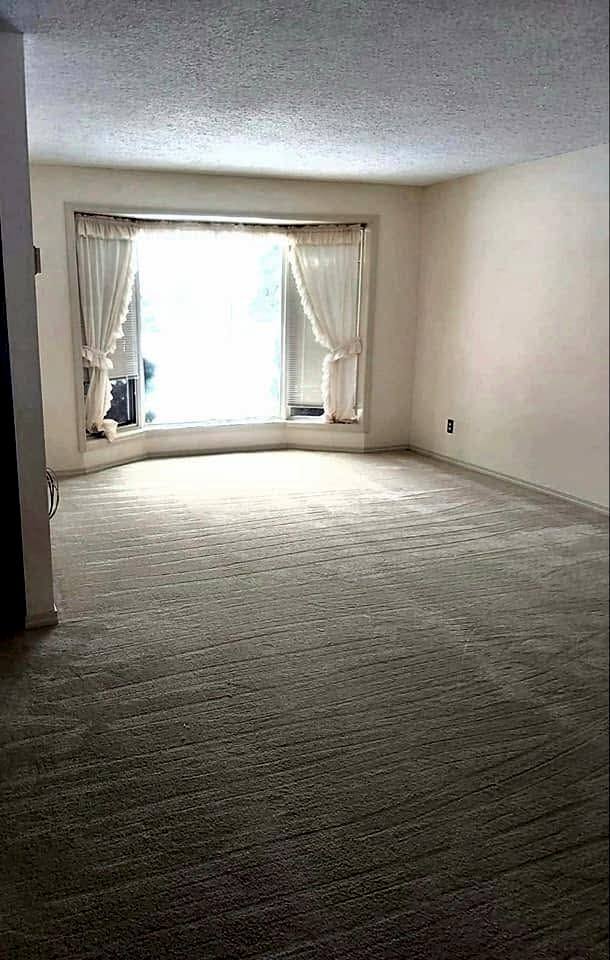
Best for media rooms, family rooms and bedrooms. Use a moisture-barrier underlay. See carpet.
3. Carpet tiles (most forgiving)
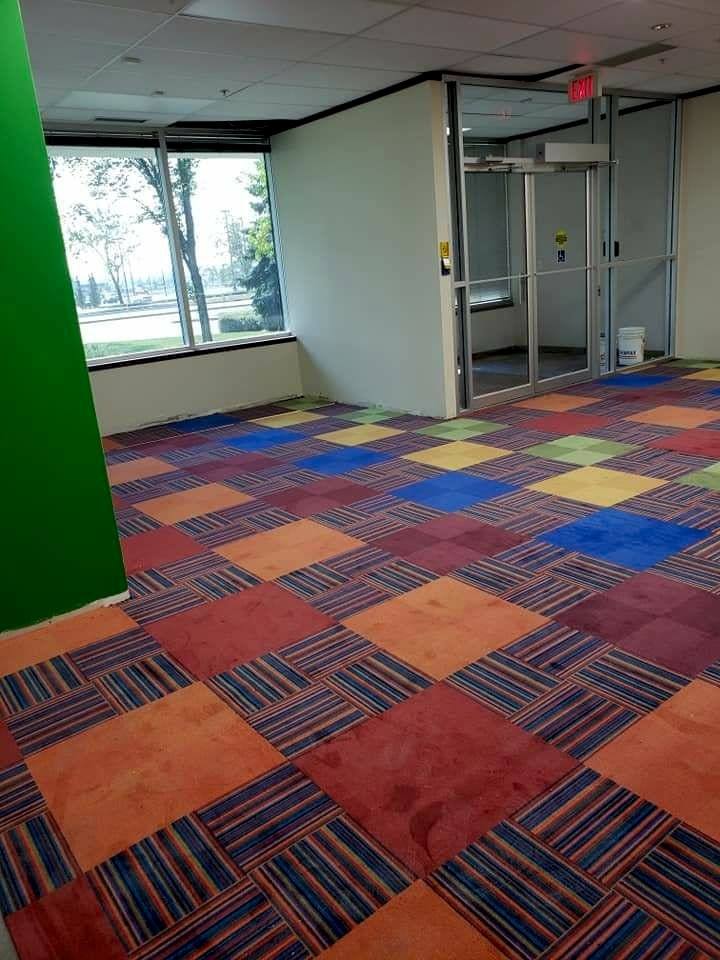
Soft like carpet, but if part of the floor gets wet, only those tiles come up. Great for rec rooms and kids’ spaces. See carpet tiles.
4. Porcelain tile with in-floor heat (most durable)
Practically bulletproof, and luxurious with heat. Cold without it. See porcelain tile.
5. Rubber (home gyms)
Protects the slab and your joints in the workout corner. See gym flooring.
Mixing floors in a basement
It’s common to combine: vinyl plank in the main living area and bathroom, carpet in the bedroom and media room, rubber in the gym corner. We plan the transitions so the heights line up.
What a basement estimate looks like
When we come out, we check the slab for moisture signs and flatness, measure, talk about how you’ll use the space, and bring samples of floors that make sense down there. Then you get a written quote. Book a free estimate, or see our basement flooring guide.
Quick answers
What is the warmest basement floor?
Carpet with a good underlay is the warmest to walk on. Insulated subfloor panels under any floor, or in-floor heating under tile, also make a big difference.
Can I put vinyl plank directly on concrete?
Usually yes, on a clean, flat, dry slab with the underlay or vapour barrier the product calls for. We check the slab for moisture and flatness first.
Do I need a dehumidifier?
Many Alberta basements benefit from one in humid summer months. Keeping basement humidity steady protects any floor.
What should I avoid in a basement?
Solid hardwood, and wall-to-wall carpet in a basement with a history of water.

One Motive Flooring is a mobile flooring store based in St. Paul, Alberta, serving the Lakeland. Information required