
Flooring advice
Is waterproof flooring really waterproof?
The planks might be waterproof. Your floor as a system usually isn't. Here's the difference, and why it matters.
“Waterproof” is printed on a lot of flooring boxes now. It’s not a lie, but it’s not the whole story either. Understanding the difference can save you from a soggy surprise.
Waterproof planks vs a waterproof floor
When a vinyl plank is called waterproof, it usually means the plank itself won’t swell, warp or fall apart if it gets wet. That’s true of many vinyl products with plastic or stone-plastic cores.
But your floor isn’t one plank. It’s hundreds of planks with joints between them, sitting on an underlay and a subfloor, with edges at every wall, tub, toilet and cabinet. Water can get through joints and around edges, and the subfloor underneath is usually wood or concrete.
So: a waterproof plank does not equal a waterproof room.
Three kinds of water
1. Spills and splashes
A spilled glass, a dog’s water bowl, snowmelt from boots. Waterproof vinyl handles this easily. Wipe it up and move on. This is where it shines compared to laminate and hardwood.
2. Slow leaks
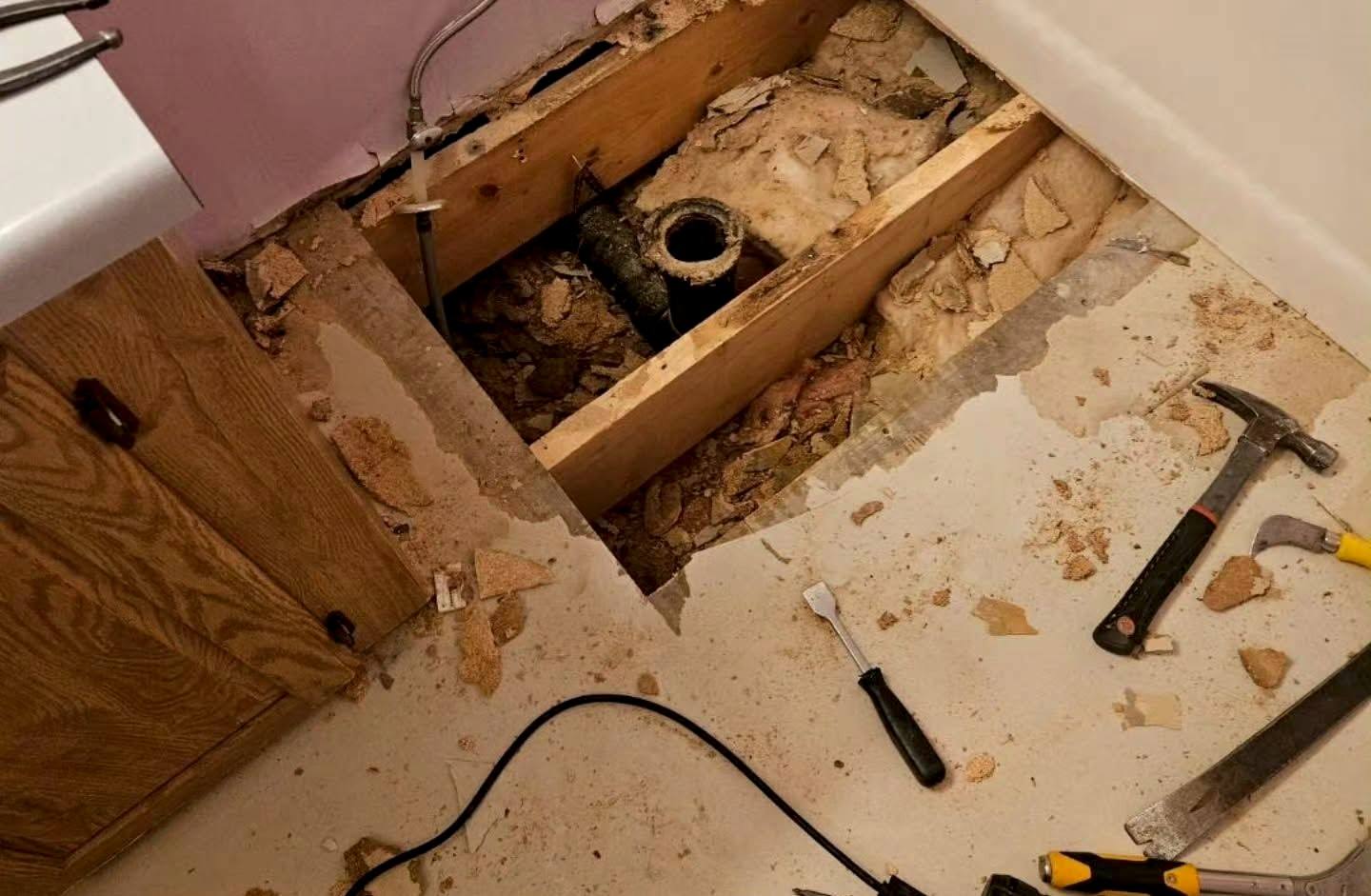
A dripping dishwasher hose, a failing toilet seal, a weeping fridge water line. This is the dangerous one. Water seeps through the joints and edges into the subfloor, unnoticed, for weeks or months. The vinyl looks fine while the wood underneath rots. The photo on this post is a real repair: a bathroom subfloor damaged around the toilet, opened up and rebuilt.
3. Floods
A burst pipe or a basement flood. Even with waterproof planks, water gets underneath and gets trapped. The floor usually has to come up to let the subfloor dry and prevent mould. Click-lock vinyl can sometimes be lifted and reused. Glued floors usually can’t.
Where water gets in
- Joints between planks, especially if the floor flexes
- Perimeter gaps at walls (covered by baseboard, but not sealed)
- Around toilets, tubs and showers
- At door thresholds, especially exterior doors
- Under appliances
How to make a floor more water-resistant
- Seal edges in wet rooms with a flexible, waterproof sealant at tubs, toilets and showers.
- Choose sheet vinyl for laundry rooms and small bathrooms. One piece means few or no seams. See sheet vinyl.
- Use tile over a waterproof membrane in showers and wet areas. See tile installation.
- Fix leaks before installing. Covering a soft subfloor just hides the problem. See floor repair.
- Install leak sensors under sinks, dishwashers, water heaters and washing machines.
- Check hoses on appliances every year.
Laminate’s “water-resistant” label
Newer laminates have better coatings and tighter, sealed joints, and many are rated to resist standing water for a number of hours. That’s a big improvement. But the core is still compressed wood fibre, and if water gets in long enough, it swells. Read the warranty’s water section carefully.
Bottom line
Waterproof vinyl is an excellent choice for kitchens, basements, entries and homes with pets, as long as you understand what it protects against. It handles everyday water brilliantly. It can’t stop a slow leak from rotting the subfloor underneath.
Want help choosing a floor for a wet area? Book a free in-home estimate and we’ll check the subfloor while we’re there.
Quick answers
Can waterproof vinyl plank survive a flood?
The planks themselves may survive, but water that gets underneath can damage the subfloor and grow mould. After a flood the floor usually needs to come up so the subfloor can dry.
Is waterproof laminate the same as vinyl?
No. Water-resistant laminate has better-sealed edges and surfaces, but still has a wood-fibre core that can swell if water sits on it long enough.
What's the most waterproof floor?
Properly installed porcelain tile over a waterproof membrane, or sheet vinyl with few or no seams.
How do I protect floors near the dishwasher and fridge?
Check supply lines and hoses regularly, use a leak alarm, and seal the floor edges at fixtures.

One Motive Flooring is a mobile flooring store based in St. Paul, Alberta, serving the Lakeland. Information required