Flooring advice
Flooring for lake cabins and seasonal properties in the Lakeland
Sand, wet towels, dogs fresh from the lake, then months sitting cold. Cabin floors live a different life. Here's what holds up.
The Lakeland is named for its lakes. Cold Lake, Moose Lake, Lac La Biche and many smaller lakes are lined with cabins and seasonal homes. Those properties put floors through a life that a town house never sees.
What cabin floors go through
- Sand and grit tracked in all summer, which acts like sandpaper on soft finishes
- Water. Wet swimsuits, dogs fresh from the lake, kids running in from the beach.
- Temperature swings. Hot summer days, then months unheated or barely heated through winter
- Humidity swings. Damp spring, dry winter
- The odd disaster. A burst pipe or roof leak that isn’t found for weeks
The best cabin floors
Rigid-core vinyl plank
For most cabins, this is the top choice. It’s water-resistant, handles sand better than soft wood, and rigid cores are stable. Important: check the product’s temperature limits if the cabin isn’t heated over winter. Some products specify a minimum temperature. See vinyl plank.
Sheet vinyl
Budget-friendly and nearly seamless, so water has few places to get in. Great for cabin bathrooms, entries and laundry. See sheet vinyl.
Porcelain tile
Bulletproof against water and sand, and works in unheated spaces if properly installed. It’s cold and hard underfoot, so it’s best at entries, around wood stoves and in bathrooms.
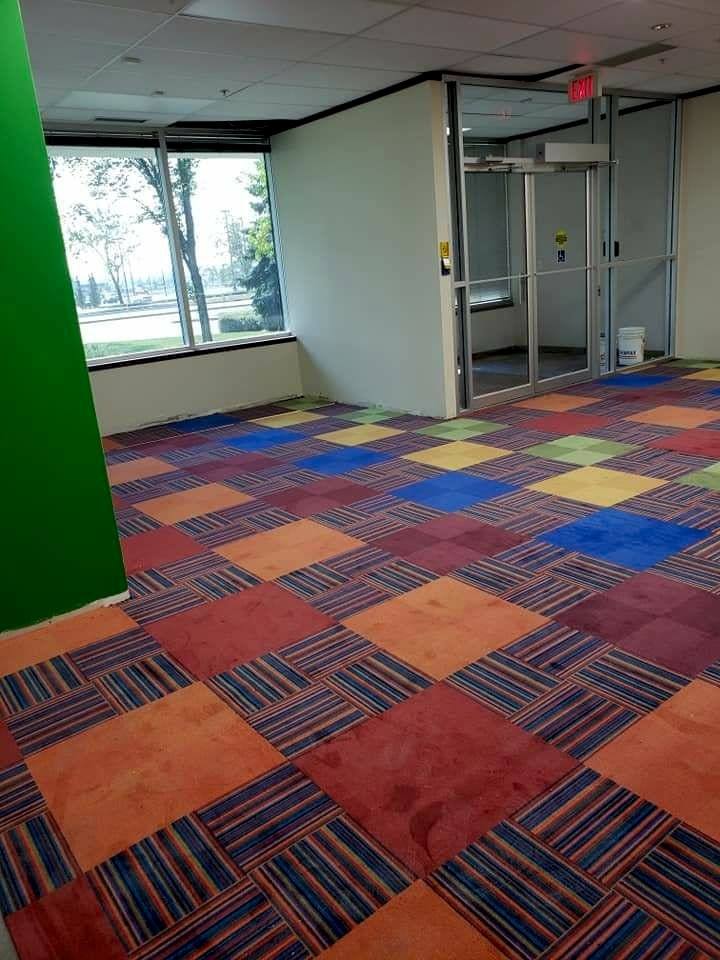
Carpet tiles for bunk rooms
Softer for bedrooms and kids’ rooms, and individual tiles can be replaced. See carpet tiles.
What to avoid
- Solid hardwood in unheated or rarely heated cabins. Humidity and temperature swings cause cupping and gaps.
- Standard laminate in entries and bathrooms. Its wood-fibre core swells if water gets in.
- Wall-to-wall carpet in main areas. It traps sand and moisture.
Wood stoves and cabin floors
Many cabins heat with a wood stove. Keep combustible flooring at the clearances your stove’s manual requires, use a proper non-combustible hearth pad, and protect vinyl from direct radiant heat.
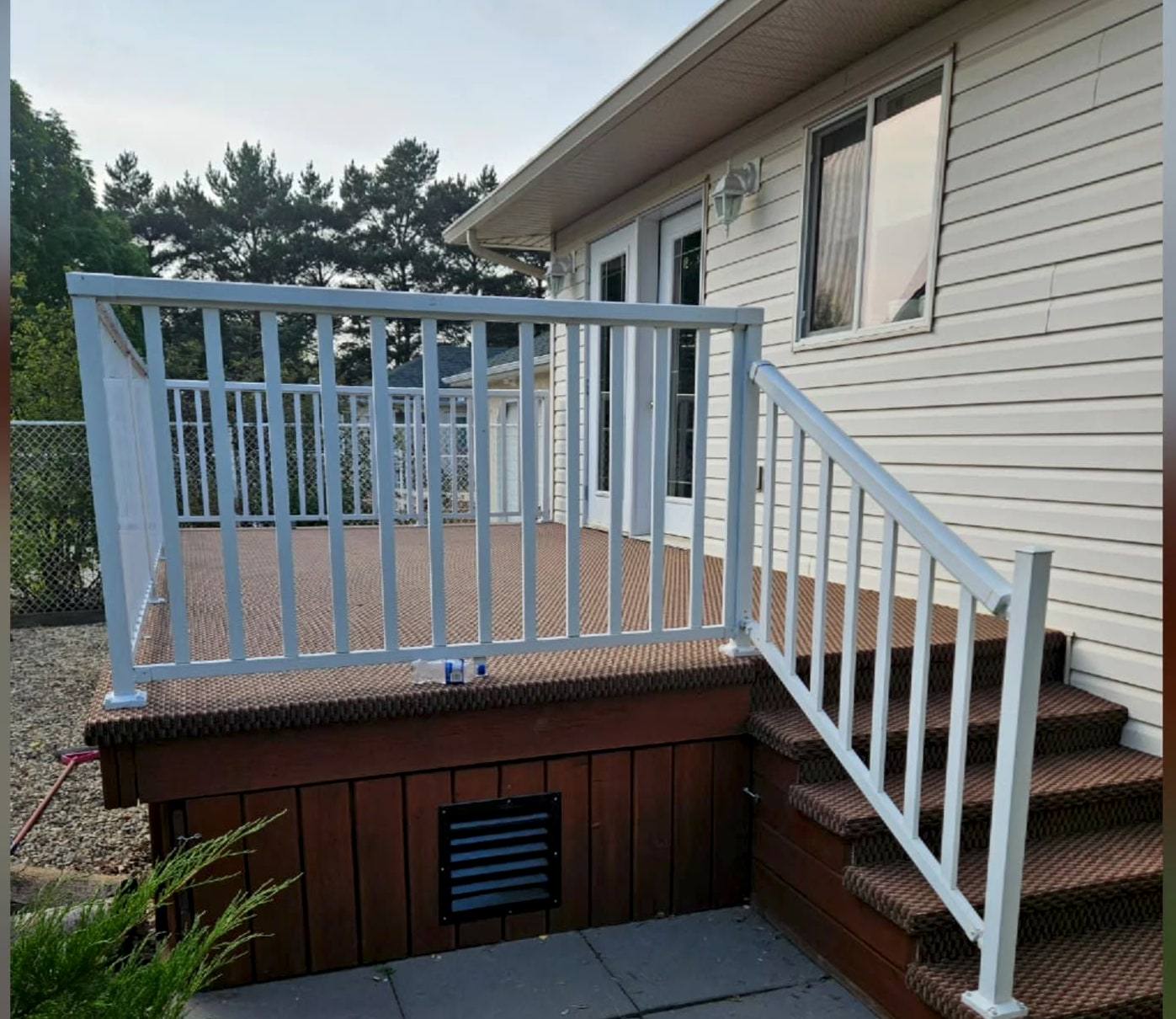
Decks and outdoor floors
The deck is half the cabin. Outdoor surfaces need products rated for freeze-thaw cycles, with good drainage. See outdoor flooring.
Closing up for winter
The best way to protect any cabin floor is to stop water before it starts:
- Shut off and drain water lines properly
- Check the roof and windows for leaks before you leave
- Leave interior doors and cupboards open for air flow
- Have someone check in after big storms if possible
Getting it done
We serve cabin owners around the Lakeland and bring samples right to the cabin, so you can see them in the light you’ll actually live with. See our service areas and book a free estimate.
Quick answers
What's the best flooring for a cabin that isn't heated in winter?
Look for a floor rated for unheated spaces and wide temperature swings. Many rigid-core vinyl products have specific temperature limits. Check them before buying. Avoid solid hardwood in unheated cabins.
Is carpet a bad idea at the lake?
Wall-to-wall carpet traps sand and moisture. In bedrooms it can work. In main areas, hard floors with washable rugs are easier.
How do I protect cabin floors over winter?
Shut off and drain water lines properly, check for roof leaks before you close up, and leave interior doors open for air flow. A burst pipe is the biggest risk to any cabin floor.
Can you install flooring at my cabin when I'm not there?
Talk to us about access and timing. We will need a walk-through at the start and end.

One Motive Flooring is a mobile flooring store based in St. Paul, Alberta, serving the Lakeland. Information required